


I’ve noticed something over the years.
Most businesses don’t care about computer maintenance. Not because they don’t value IT, but because when things are working, it feels unnecessary. Computers turn on. Emails send. Files open. People get their work done.
So, maintenance gets pushed back.
Updates are postponed. Old hardware stays in use longer than it should. Security warnings are ignored because nothing bad has happened yet.
And honestly, that approach works… until it doesn’t.
When something finally breaks, it never happens at a good time. It’s always during payroll. Or a deadline. Or an important call. That’s usually when someone asks, “How did this even happen?”
The answer is almost always the same: it didn’t happen suddenly.
Problems Don’t Appear Out of Nowhere
Most computer issues grow quietly.
A laptop starts running slower, but it’s still usable.
A server throws small errors that no one checks.
Backups run, but no one has tested them in months.
Nothing looks urgent, so nothing gets fixed.
People adapt. They wait an extra minute. They restart devices. They work around it. Over time, those small issues pile up.
By the time IT gets involved, the situation has already moved past “simple fix” territory.
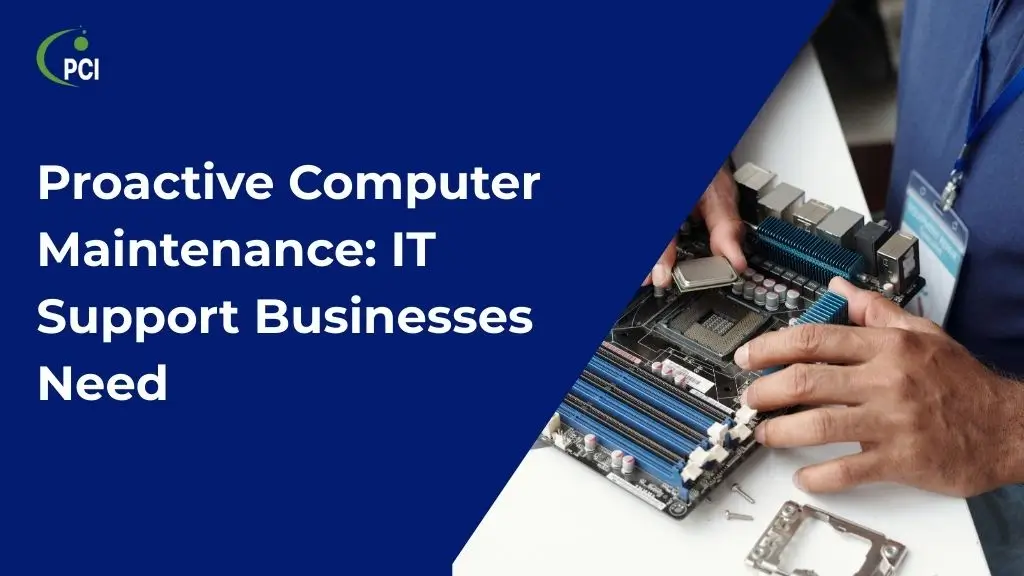
That’s where proactive computer maintenance makes a difference — not by being dramatic, but by stopping problems while they’re still boring.
What Proactive IT Support Really Looks Like
Proactive maintenance isn’t some complex strategy. It’s mostly discipline.
It’s checking things regularly, even when no one is complaining.
It’s applying updates when it’s inconvenient, instead of when it’s an emergency.
It’s replacing hardware before it fails instead of squeezing one more year out of it.
A lot of it happens in the background.
Users don’t notice when systems are patched on time. They don’t notice when a failing drive gets replaced quietly. They only notice when something stops working.
Good IT support aims for that invisibility.
Why Reactive IT Always Costs More
Some businesses prefer a reactive approach because it feels cheaper.
Why pay for maintenance when nothing is broken?
The problem is that emergencies are expensive. Not just in terms of repair costs, but in lost time, stress, and disruption.
When systems go down unexpectedly:
- People stop working
- Meetings get cancelled
- Deadlines get pushed
- Everyone gets frustrated
Fixes also tend to be rushed. Decisions are made under pressure. Long-term improvements get skipped because “we just need it working right now.”
That’s how temporary fixes turn into permanent problems.
Security Issues Are Usually Maintenance Issues
Most security incidents don’t start with sophisticated attacks. They start with something simple that was overlooked.
An update that wasn’t installed.
A system that’s no longer supported.
An account that should’ve been removed but wasn’t.
These are maintenance problems.
Proactive computer maintenance includes keeping systems current, reviewing access regularly, and closing gaps before they’re noticed by the wrong people.
That’s why ongoing IT support matters. Teams like PCI Services focus on regular system care — patching, monitoring, and preventive checks — instead of only stepping in after something goes wrong.
Security works best when nothing happens at all.
Slow Computers Cost More Than People Think
When computers slow down, work doesn’t stop. It just drags.
People wait for applications to load.
Files take longer to open.
Systems freeze at inconvenient moments.
No one logs this as downtime, but productivity drops anyway.
Proactive maintenance helps keep systems running the way people expect them to. It’s not glamorous, but it saves hours over time.
Employees may not talk about it, but they feel the difference.
Why Internal IT Teams Can’t Do Everything
Even strong internal IT teams struggle to stay proactive.
They’re busy. Someone can’t log in. A printer stops working. A new employee needs a setup. There’s always something urgent.
Preventive work gets pushed back because there’s no immediate pressure behind it.
That’s not a failure — it’s just how day-to-day support works.
This is why many organizations rely on managed IT support for routine maintenance. It ensures that updates, checks, and system care actually happen consistently, not just when someone remembers.
Proactive Maintenance Makes Growth Easier
As businesses grow, technology gets more complicated.
More users.
More devices.
More software.
Without proactive maintenance, growth exposes weak spots fast.
With it, systems scale more smoothly. Problems are addressed early. IT supports growth instead of reacting to it.
That stability matters more than most people realize.
Final Thought
Good IT support isn’t loud.
It doesn’t announce itself. It doesn’t wait for things to break. It keeps systems steady so people can focus on their work instead of their computers.
Proactive computer maintenance isn’t about being perfect. It’s about paying attention before problems force you to.
Most businesses learn that lesson eventually.
The smart ones learn it early.